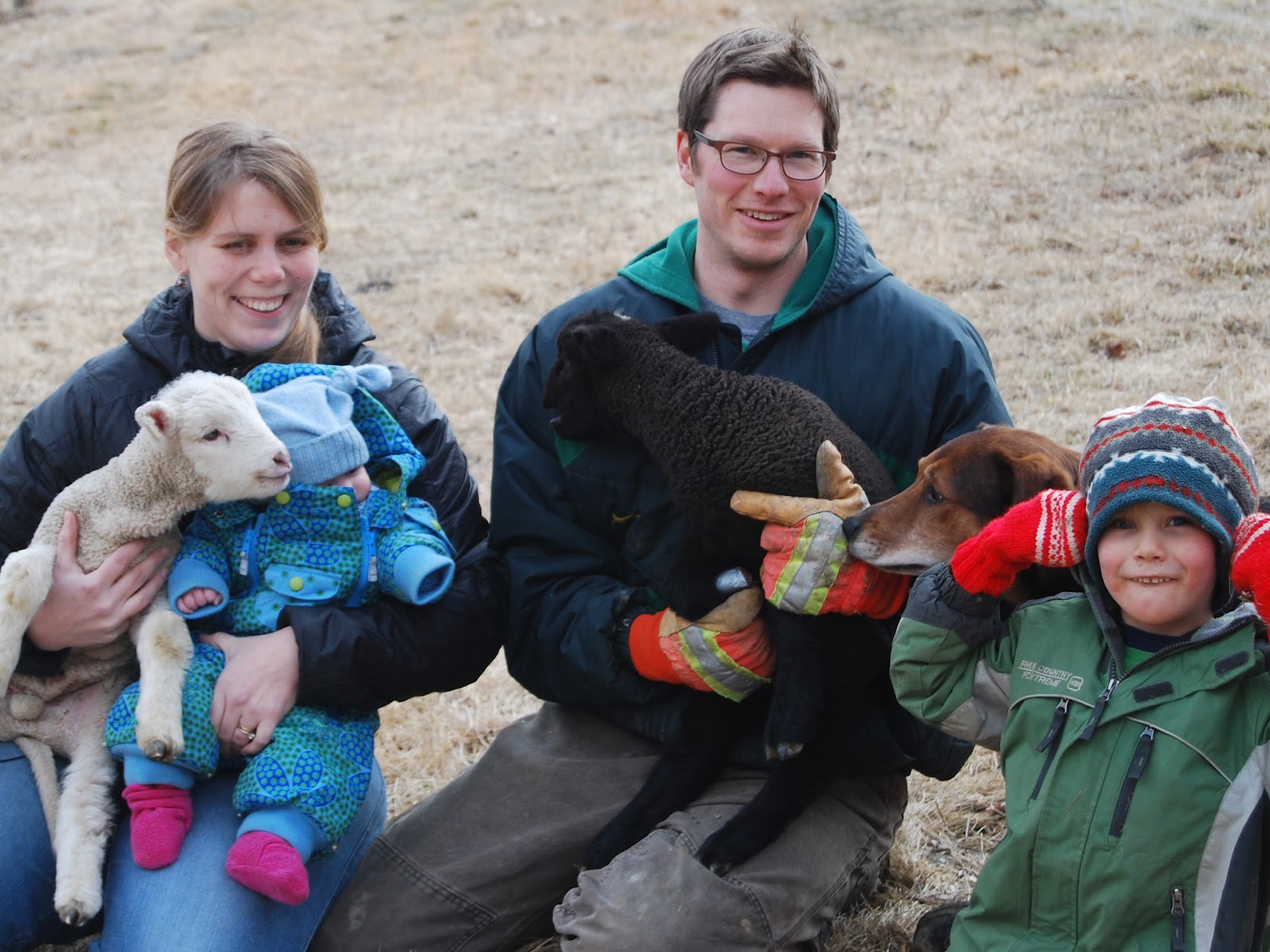
Formerly,Bar None Ranch, of Berlin, NY, we are now Climbing Tree Farm, of New Lebanon. We raise PASTURED POULTRY, LAMB, GRASS-FED BEEF, and WOODLAND/PASTURE-RAISED, MILK-FED PORK. We keep our animals true to their instincts- letting our pigs dig, our chickens range, our sheep graze. We feed rotationally graze on pasture and silvo-pasture (in the woods). We work with a local dairy to feed our pigs Jersey milk. We are conscientious stewards of the land, and our animals.


Please visit our website climbingtreefarm.com
or contact us with questions or to place orders.


Saturday, December 28, 2013

What These Farmer's Do in the Winter


Butter (the mother pig) and the Butter-pats (piglets).

Often, when people hear we are farmers they say something like "oh, how nice, so you have the winters off?" I am here to say this is not so... I can't speak for vegetable farmers, because I am not one, but work does not cease on a livestock farm during the winter or otherwise; not in the winter, nor on our Birthdays, nor on Christmas. Animals eat, and have needs every day, year round. What does change is the kinds of work we do, the population on the farm, and the weather. 

We do not keep poultry over the winter (in the past we kept laying hens, but found that they did not thrive in the housing we could provide them with during the coldest months at our new farm). We do keep sheep and pigs over the winter. January through March is lambing time at our farm, which brings its own special set of chores. We will begin farrowing (having piglets) in the winter later this season. Housing requirements are greater in the winter- which means Fall and Winter are times for harried construction projects, and winter is a time of lugging bedding. Water is a big issue in the winter, because automatic waterers freeze, water must be carried to the animals daily (or often a few times during the day), and ice must be chipped. Our pigs drink a LOT of dairy, which must either be transferred to a heated tank or by the crate into our basement so that it doesn't freeze, and then distributed daily to the pigs. Swift shifts in the weather, and prolonged extreme cold can be hard on the animals, with pneumonia being a particular threat to smaller piglets (though thankfully we have avoided this completely so far this year!). Changing weather conditions make it hard to tell what to expect each day during our chores, and difficult to plan transportation to slaughter or to new forage- we've been alternating deep snow, and deep mud this year! We gain two (nearly full) days each week after holiday farmer's markets dwindle in Mid-late December...which is bitter sweet. We love seeing our customers each week and depend on the income we make there, but it feels fabulous to eat pancakes and play with play dough on a Sunday morning with our kids. (I counted and think we went to 48 farmer's markets this year!- We will have to eat a lot of pancakes this winter to make up for those lost weekend mornings with our kids!). 

While we don't have the winters off, our life is good (and busy) year round.


Transferring milk to heated tanks.
This has GOT to be one of the coldest jobs ever done by the human hand.

A common winter scene indoors at our house...one kid making pancetta, the other making bacon.

Butter-pats roughly one month later- growing well in the winter woods
 -on a diet that includes very little grain.


Pig Garden Update

The pigs have been working hard in their garden. These pictures are from a month or two ago, but illustrate well how efficient pigs are at foraging and how important it is to keep them moving from one spot to the next.  


 It took  17 medium sized (90-120 lbs) pigs 10 days to turn:

THIS 

into THIS!
We're always yammering on about how important rotational grazing is, especially for pigs. This is why...these pigs were moved in time to prevent soil degradation, but if we had left them longer the soil would have become compacted, and new forage would not be able to grow to feed the pigs in the future (among many, many other reasons that soil compaction is not a good idea). YAY for rotational grazing!

Tuesday, November 19, 2013

The Turkeys are Almost Ready!


Tending her flock.
The Monday before Thanksgiving these birds will be processed at nine the morning. At three in the afternoon on that same day a swarm of Thanksgiving celebrants will swoop onto the farm, and choose their holiday bird. You can't get much fresher than that. Birds have been pre-sold.

Please reserve a turkey for next Thanksgiving for a fabulous meal!


Sharing an apple with a friend.

Pig Garden!

Pigs being unloaded into the "pig" garden that we planted this spring.
 
These photos were taken in late October, on the day of the first hard frost. We chose to put the pigs in on the day of the first hard frost in order to give the forage crops as much time to grow as possible.

Trying out: mangles, pumpkins, tomatillos, vetch, clover
 

Yum, grass!
 (Check this pig out...it looks like a white pig, but it's skin is black. What a funny color combo- especially coming from a Large Black sow and Tamworth boar (which is a red pig).

Even weedy gardens taste good to pigs!

Considering a nibble of mullein.
 
 
Delicious mangles (feed beets).


The pigs LOVE their new garden. When Colby did his last chores of the night he noticed the pigs chomping away in the garden well past their bedtime.
 
We plan to add many more pig gardens in the years to come. In the future we plan to grow turnip, rape, and field peas in addition to the pumpkin, vetch, mangles, clover and sunflowers we tried this year.
 

Thursday, October 31, 2013

Pigs in the Woods

 
These photos were taken in mid October. The pigs are content in the fall forest. They are turning away grain in favor of apples that we're picking from our orchard, dairy (and lots of it!) and nuts falling from the trees. Colby has been strategically moving the pigs for months getting them into perfect position for their nut harvest- acorns, beech nuts, hickory nuts and a few walnuts and butternuts. The Iberico ham (grown in Southern Spain and Portugal) is widely regarded as the best ham in the world. The best of the best Iberico hams come from animals that are kept free-range in oak forests, where they consume an acorn rich diet. We are attempting to mimic the growing conditions of the best pork in the world...so that you can come to New Lebanon, NY for fantastic pork, rather than making the long journey to Spain or Portugal!

Pigs are perfectly suited for the forest.

Mulefoot Hog and Berkshire Cross Hog


Group of Mulefoot hogs- noted for their exceptional foraging capabilities and its wild game flavor.

 
Another happy day on the farm. Pumpkins!

Last year we fed the pigs ten truck loads of pumpkins in the space we later used as our garden for the animals. Feeding pumpkins is FREE (after Halloween), pumpkins are vitamin rich, and the seed also helps to eliminate any worms that the pigs may be carrying. Autumn is a particularly good time of year to worm so that the animals go into the winter with an uncompromised immune system. The other wonderful side benefit of feeding pumpkins is that this year we have dozens and dozens of big, beautiful pumpkins that grew out of the manure left by the pigs!

Our kids love the Easter-egg-hunt-ish feel to finding pumpkins randomly around the animals' food plot, and it was a great lesson for Huck to see the long range effects of the work we did nearly a year ago when we gathered pumpkins from our friends' pumpkin farm.

Our plan is to have many more food plots like these spread around the farm. We will plant crops with like harvest dates together, and run the pigs through them as the plants mature. For example- this year we have pumpkins, mangles (which are basically big beets grown as livestock feed), and turnips planted together. We LOVE when our animals can do the work of harvesting for themselves!

If you're in the market for pumpkins come visit us at the Downtown Pittsfield Farmer's Market in the next few weeks.


A very rare treat in which Huck and Tillie get a  ride for about 15 feet behind the four-wheeler.


Saturday, September 7, 2013

Thank You Piggies

As a family, when we eat meat we always thank the animal we are eating. When we began farming it was, in part, to provide our kids with healthy meat, and also to show them a real world connection between what they eat and where it comes from- with meat that means: (once) live animals and hard work.

Last night at dinner for the very first time our (almost) two year old thought to thank the piggies. It made me feel so happy and like we were doing what we set out to do when being around our table, eating food we grow made our little two year old feel thankful...even if we weren't eating pork.