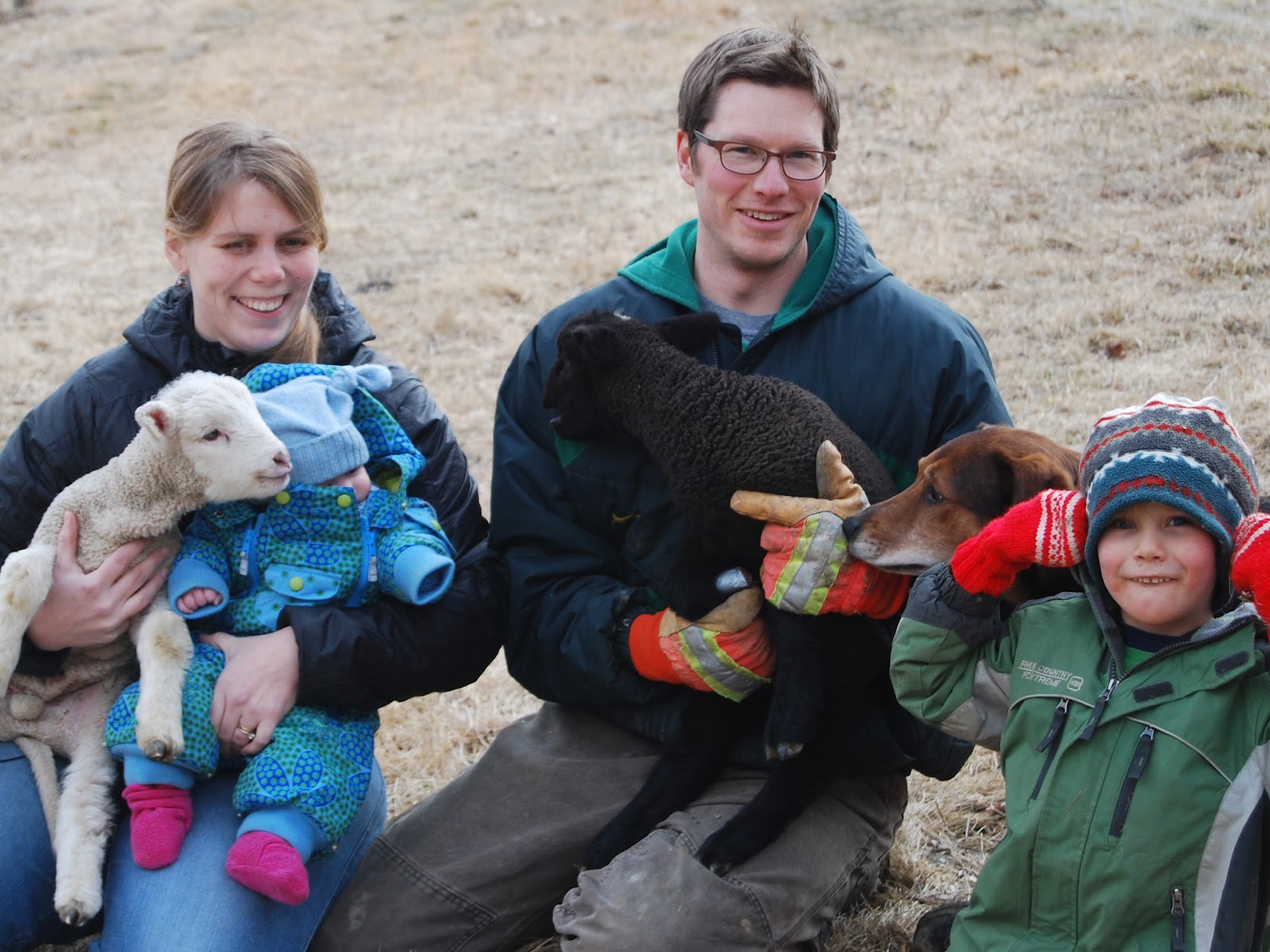
Formerly,Bar None Ranch, of Berlin, NY, we are now Climbing Tree Farm, of New Lebanon. We raise PASTURED POULTRY, LAMB, GRASS-FED BEEF, and WOODLAND/PASTURE-RAISED, MILK-FED PORK. We keep our animals true to their instincts- letting our pigs dig, our chickens range, our sheep graze. We feed rotationally graze on pasture and silvo-pasture (in the woods). We work with a local dairy to feed our pigs Jersey milk. We are conscientious stewards of the land, and our animals.


Please visit our website climbingtreefarm.com
or contact us with questions or to place orders.


Showing posts with label Chickens/eggs. Show all posts

Thursday, May 21, 2015

Laying Hens...again

Schuyler Montgomery-Nassif Gail's photo.


Schuyler Montgomery-Nassif Gail's photo.
Our hens

We started with 25 laying hens. It was fun. We knew each chicken's personality and quirks. We knew which chicken laid the biggest eggs, the spotty eggs, and which one was likely to lay eggs with double yolks. Our son was smitten, he played with the birds. We sold a few dozen eggs per week.

The next year we had 125 laying hens. It was fun too, but busier. Our son still played with the chickens. We sold tens of dozens of eggs per week. Our customers couldn't get enough.

For the next several years we kept 300-500 laying hens. It was crazy. They destroyed our garden. If we left the door open they would come in and (literally) poop on our kitchen table. It wasn't fun anymore. It was a job (but only marginally profitable). There were so many birds that our kids were scared to go in the fence with them alone.  We washed 450 eggs per day and sold what felt like billions of eggs per week. We had stacks of full egg cartons six feet tall. One of my messiest days (EVER!) was when the leaf on our table collapsed under the weight of 50 dozen eggs, breaking nearly all of the eggs. The floor flaked and peeled with egg whites for weeks, despite diligent and frequent mopping. Our customers were happy, but we weren't.

Around that time we took a Holistic Management class (look up HMI- it's awesome!). Unlike other business/ farming programs Holistic Management looks at what is best for your business, your land, and your family. It became clear to us that eggs weren't for us. They weren't fun anymore, washing all of those eggs was taking away time from our family, it was driving us crazy that the chickens were in our personal/family space (when they pooped on the table and ruined our garden). We went from 500 laying hens to 0. We bought eggs from other farming friends...and it was fantastic!

Eventually, we started missing having our own laying hens and our own eggs. We now have a dozen chickens. Our children play with the chickens, they are enjoying the responcibilities of caring for the birds and gathering eggs. Our daughter beams every time she does her chores- so proud of her chickens. She is learning to count by tallying up the eggs every day (a much more manageable task with about 10 eggs per day than with 450). Laying hens are fun again and we're happy to have them. Sometimes less really is more.


Monday, April 27, 2015

Life and Death (warning: graphic photos of chicken slaughter + pictures of adoreable newborn calf)

For the last several months we have been helping students at a local boarding school, Darrow, to prepare for and raise chickens for a project that they are working on- in which they hope to create a McDonald's-like "Happy Meal" with sustainable materials. Last Wednesday was slaughter day. We've been curious to see how the students would react to killing and cleaning the chickens they helped to raise from newly hatched chicks. These kids are awesome! They handled the chickens' death with dignity, kindness and purpose.
 
A group of students came to our house to pack the chickens up and take them to the school for slaughter. We talked about how that moment, when you choose to take the animal off pasture and to turn a living being into food, is a privilege, and something that should be done with ceremony, respect and gratitude. It felt  good to see these chickens help teach these lessons. I was proud of the students, who we have been working with for the last five or so months- they have a lot left to learn (about farming, and life, and all the millions of things we all have left to learn), but this they did really well.
 
During the slaughter I re-fielded a question I often get "why doesn't it bother you when your animals are slaughtered?" It does. Its sad every time. These are living things (some of whom are extremely cute and/or animals that we have become close with) and we choose to kill them. When killing animals (that we care about) becomes nonchalant and fails to stir our emotions- then we will know that we need to stop raising animals for meat. We respect our animals in life and we are thankful for them in death.


Generally at the end of slaughter you are left with a bucket of intestines, other unpalatable organs,
and heads. This slaughter was different- the biology teacher who helped with this project gave a
running commentary of every organ and how it worked. She even found a chicken heart with fluid
and explained that the chicken might have been experiencing heart failure.This is what teenagers do
 with chicken heads...they discussed putting them on strings or sticks to use them as puppets for
 performance art. Love to see every piece of these chickens used and appreciated.

Standing!

While the cow labored some of the herd looks on.
After slaughter with the high-schoolers, our kids and I stopped by our friend Cynthia's farm. She had had two heifer (girl) calves born that morning, and when we arrived we learned that a third calf was on it's way. We watched from the car in the pouring rain with Cynthia as one of her Randall Cattle gave birth.  The cow grazed the fresh spring grass as she labored, occasionally arching her back or laying down to resituate the calf inside. We watched for about a half an hour before a bull calf was born into the pouring rain. The mother licked and cleaned the baby and the calf was up and walking (on wobbly legs) about a half an hour later. Birth, like death, is something that people don't see very often these days, in this culture. In a world so divorced from life and death, I feel lucky to see the almost magical segue between alive and dead, sometimes all in one day, and to feel my heart stir. It reminds me that I am alive.
 
That night four Great Blue Herons flew over our house in a perfect line. Somehow that felt important, but I'm not sure how. 


Sunday, February 22, 2015

Chicks on Darrow Campus


The chicks have arrived at Darrow School, where we are helping high school students raise and slaughter chickens for their sustainable "happy meal" project. At first the students would only poke and pet the chicks in their shipping box, but then they quickly became comfortable picking up the chicks. One teenaged boy said "it's like holding an angel."


One of the chicks was injured in transit. We discussed its options. We could leave it and let it die on its own or we could kill it, with the assumption that we would be lessening its suffering. Of killing the chick many of the students said things like "But I don't want it to die." We reminded the class that they aren't pets, and that in the end all of the chickens will die- so that they can have meat. This seemed eye opening, especially after the flurry of chick naming and cuddling. In the end the students decided that it was the most fair to the injured chick to kill it in order to prevent further suffering. One brave 10th grade girl did the job. I was impressed that this young woman and her peers chose the more difficult route in the name of kindness. I am proud to be working with these deep thinking, compassionate human beings. It gives me hope to meet young people like these.

 
The world's best documented chicks are raised
by teenagers with smart phones...


Friday, June 27, 2014

Gosling Love

Goslings are soft, and adorable, but not too fragile for BIG two year old love.


Sweet kisses.......but this is not recommended.

Pigs. Glorious Pigs.

Piglets- about 15 weeks old. Just before being moved to a new section of fencing.
 So curious!


Tuesday, May 27, 2014

Beautiful Morning at Climbing Tree Farm/ Young Pig Breeding Group


Early morning chores with no kids makes it much easier to take pictures!


One of these things is not like the others...

Note: To encourage the chickens to graze we feed grain only once per day, this also helps them
to grow at a healthy rate- not too fast. Needless to say, the birds get pretty excited at grain time
and aren't great about turn taking.

Young Mulefoot gilt. (gilt= young, un-bred girl pig)

Young breeding group on field/forest.
We keep breeding groups small, and with similarly sized pigs.

This section of fence was last used about six months ago-
with rest the vegetation comes back quite well. At this time last year the hillside these pigs
 are standing on was covered in six foot tall, super-invasive multi-flora rose bushes. Yay pigs!

Colby spends more time with the pigs, so he typically chooses who will be kept for breeding.
The pigs we keep to breed are selected based on many factors.
Here are some of the things we think about when we choose who will become breeding stock:

how well they forage
how well they respect the fence
 whether or not they are pushy with people or other pigs
whether or not they are loud and squealy
the quality of meat (tested when their siblings go to slaughter)
body conformation
general health
whether their mothers were good mothers


This fence is about an acre in size, roughly half field/half woods.
Five breeders will stay in this space for around a week or two
depending upon the condition of the ground and forage.

Powerful nose.


Meat chickens resting in a shelter made from a (very clean!) used septic tank.

Sheep: curious about the grain bucket I was carrying.

Sheep: so curious about the grain bucket I was carrying that one
 got a bucket stuck on her head.

Thursday, May 1, 2014

Meremma on the Job

We welcome Kapugen to our farm!

 
Kapugen is a four month old Maremma livestock guardian dog. The breed originates from Italy, and, unlike many working breeds, has not been mainstreamed as a pet. Kapugen will be kept as a working dog. He was born on a working farm to working parents. Kapugen and his litter mates were born in a barn in December. They have never been inside a human house, but instead snuggled up with the pigs while their parents were working.  He will feel right at home at our place with plenty of pigs to visit with. At our farm Kapugen's main task will be guarding poultry (chickens, geese and turkeys) from predators. We have a particular problem with aerial predators, like hawks, on our farm. The year before last we consistently lost a bird or two per day to predation. Last year we reduced that by adding a flock of geese, but we raise geese for meat, so they come and go as youngsters. We're hoping our new dog learns to look up into the sky! Kapugen was introduced to the young meat chickens this week, and has been on the job ever since. We were expecting a rambunctious, rascally puppy, but Kapugen takes his job seriously. He mostly sits and watches the birds and every once in a while gets up to circle the birds to make sure all is well. At four months old he has chased the birds exactly once. When corrected he stopped and hasn't done it again. I wish our children were so easy to teach!


Kapugen got his name from a character in the children's book Julie of the Wolves, by Jean Craighead George. Our family read the book aloud this winter and loved it. It is about an Inuit girl, Julie, who gets lost on the Alaskan tundra, and assimilates into a wolf pack to survive. In the book Kapugen is the main character's father. He combines old and new ways of living to help his people survive. Our farming methods are very much a mix of new and old techniques, and animal husbandry. Julie names the wolf pup, who eventually saves her life, Kapu, after her father. Our little Kapugen will be a "lifesaver" for the poultry. It is important for Maremmas to bond with their charges, and having a dog become part of the chicken flock reminded us of how the wolves bonded across species with Julie.
Kapugen is shy with people. He will grow to be a great, big, fluffy dog, and while we are hoping
 he does a good job deterring predators, another part of hos job description is being petted a LOT by kids-
 our own and visitors to the farm.


New chicken sunshades- free materials, easy to move, and fun to climb on!


Thursday, April 3, 2014

Chicks- for pleasure and meat...


After many years of brooding chicks in our basement (which is smelly, dusty and cumbersome),
we now have a chick brooding shed. the back third of the shed is sectioned off for brooding, with 50 gallon drums split lengthwise, strung with heat lamps, and used as a heat hood. It has been quite a bit colder out than we expected so far this brooding season, but we have been able to keep the little guys warm with extra heat lamps and rigid insulation piled on top of the brooder. In their first weeks chicks require a temperature of around 90 degrees (think- snuggling up under mother-hen's tail feathers). As their fluffy down falls out and is replaced by feathers chicks become more all-weather animals. Their first day in the shed it was about 22 degrees outside. We were worried that the brooder wouldn't be warm enough and the first day we visited the chicks every hour. After several trips to the shed Colby had the brilliant idea to put the remote sensor for our thermometer in the brooder- so we can now monitor the brooder temperature without putting our boots on and slogging around in the mud!

Washed up all of the chick feeders and waterers- made a resolution to wash them
 (outside with the hose) at the end of this chick season so that in the spring of 2015
 I do not need to scrub chicken poop off of them in my bathtub again...ever.

Picking up chicks from the post office. This box contains 100 little peeping fuzzballs.

Our son asked for chicks for his 7th birthday. He chose Cochins. They grow to be big, fluffy, and are quite tame. He likes that they have feathered legs and feet.
Here he is at the post office, meeting his new friends.

Opening Birthday present chicks:
 25 Cochins (egg layers) to keep and play with.
75 meat birds to slaughter and sell.
(And, to keep the birthday chicks warm on their journey to our house).
For the past several years we have had between 300 and 500 layers.  We've decided that egg
production is not a viable part of our business, so we will no longer be selling them. It's felt weird
buying eggs from our friends' farm,  rather than out from under our chickens. These little ladies will
 provide our family with eggs in about 22 weeks. And,  our son is thinking about starting his own egg
business. Stay tuned for details.
When we get new animals we always discuss with our kids which animals are for meat,
and which will stick around as pets or breeders. This way they know who to get attached to.
These chicks are pets!


Building a fort for, and reading to the new chicks.

Chicks love stories.

Baby cochins.

Sleepy chick!

The birthday chicks live in the brooder in the shed with the other chicks,
 but come out for visits and story time.

Monday, March 10, 2014

Lebanon Valley Cooperative Meat CSA Sign-up!

It's that time again! Time to sign-up for the Meat CSA.
Although the thermometer doesn't show it, spring is on it's way!

We are now working with three local farms to provide you with super produce and meat:

The Abode Farm (vegetables): abodefarmcsa.com
Artemis Farm (grass-fed beef): Cynthiasrandallcattle.com
Trusted Roots Farm (vegetables and eggs): trustedrootsfarm.com

Read more about our Cooperative Meat CSA on our website:
 climbingtreefarm.com