Informative article:
All You Need to Know to Eat Good, Grass-Fed Meat
:
http://www.motherearthnews.com/real-food/grass-fed-meat-zm0z12jjzkon.aspx#ixzz24Z0gPJTa

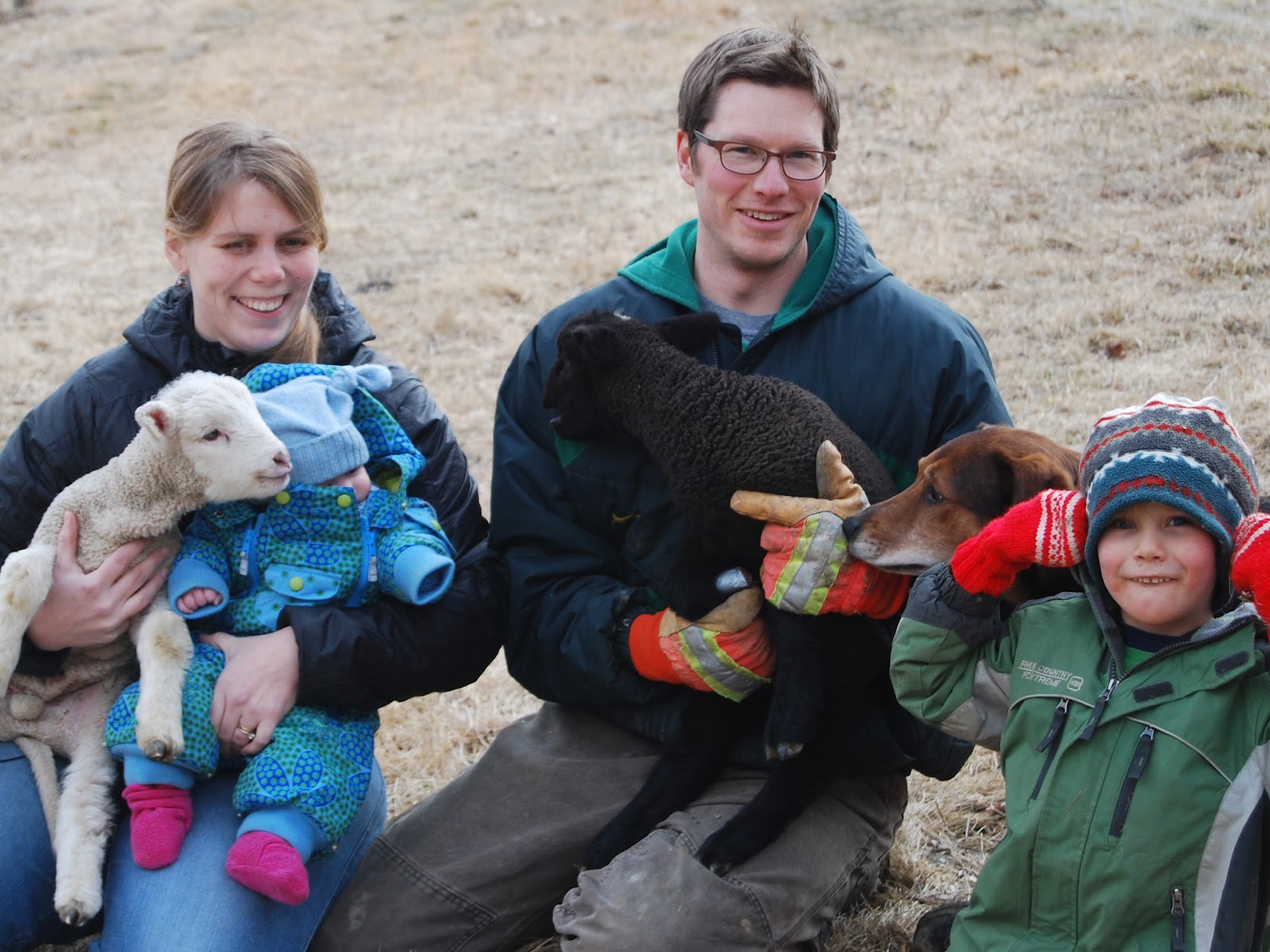
Formerly,Bar None Ranch, of Berlin, NY, we are now Climbing Tree Farm, of New Lebanon. We raise PASTURED POULTRY, LAMB, GRASS-FED BEEF, and WOODLAND/PASTURE-RAISED, MILK-FED PORK. We keep our animals true to their instincts- letting our pigs dig, our chickens range, our sheep graze. We feed rotationally graze on pasture and silvo-pasture (in the woods). We work with a local dairy to feed our pigs Jersey milk. We are conscientious stewards of the land, and our animals.
Please visit our website climbingtreefarm.com
or contact us with questions or to place orders.
Tuesday, November 6, 2012

Beauty and Danger in the Air

Predation is a constant problem on our farm. Each predator has a different style; for example, weasels sneak in and slaughter the whole flock, raccoons love chicken breasts, and the hawk seems conscientious. It eats all of the meat off a chicken. We have not figured out how to deal with hawk predation (we move our birds at least weekly, so a covered run would be impractical). Because the hawk is the least wasteful and puts on the most beautiful show of the predators on our farm, I think I like and respect them more than our other chicken-hungry neighbors. Our short term solution to our hawk problem was selling off the layers for the winter. We will have layers again in the spring and are looking for a successful hawk deterrent, besides shooting them, which hardly seems fair to a neighbor who pre-dates us at the farm, and will only encourage another bird to take its place (and is illegal). If you know of a possible solution please pass it along, we'd love to give it a try! No idea too ridiculous.
Saturday, September 15, 2012
We eat by the grace of Nature, not by the grace of Monsanto
I found this article interesting and important:
We eat by the grace of Nature, not by the grace of Monsanto
http://bethechange2012.wordpress.com/2012/09/08/we-eat-by-the-grace-of-nature-not-by-the-grace-of-monsanto/
“Organic, schmorganic,” fumes New York Times columnist Roger Cohen sarcastically in an article entitled “The Organic Fable.”
He bases his sweeping dismissal of the organic foods movement on a new Stanford University study claiming that “fruits and vegetables labeled organic are, on average, no more nutritious than their cheaper conventional counterparts.”
Cohen does grant that “organic farming is probably better for the environment because less soil, flora and fauna are contaminated by chemicals…. So this is food that is better ecologically even if it is not better nutritionally.”
But he goes on to smear the organic movement as “an elitist, pseudoscientific indulgence shot through with hype.
“To feed a planet of 9 billion people,” he says, “we are going to need high yields not low yields; we are going to need genetically modified crops; we are going to need pesticides and fertilizers and other elements of the industrialized food processes that have led mankind to be better fed and live longer than at any time in history.
“I’d rather be against nature and have more people better fed. I’d rather be serious about the world’s needs. And I trust the monitoring agencies that ensure pesticides are used at safe levels — a trust the Stanford study found to be justified.”
Cohen ends by calling the organic movement “a fable of the pampered parts of the planet — romantic and comforting.”
But the truth is that his own, science-driven Industrial Agriculture mythology is far more delusional.
Let me count the ways that his take on the organic foods movement is off the mark:
The result has been the rapid and wholesale devastation of vast swaths of our planet—biodiversity giving way to monoculture, killer weeds and pesticide-resistant superbugs going wild, the weakening and sickening of every strand of the ecological web of our planet.
 The relevant fable to invoke might be the tale of Jack and the Beanstalk. We might be able to grow a fantastically huge beanstalk if we fed it with enough chemical fertilizers, and we might even be able to climb it and bring back a goose that lays golden eggs.
But in the end, that beanstalk will prove to be more dangerous to us than it’s worth—we’ll have to chop it down, and go back to the slow but solid organic way of life that has sustained us unfailingly for thousands of years.

Note from Schuyler:
One thing I would like to add, is that some farms (like ours) that are not "organic" are that way intentionally. Our animals all live on pasture, and those that eat grain (pigs and chickens, but not sheep) eat locally grown grain. We have chosen locally grown grain over organic, because the grain we feed travels far less far to get to the farm, is fresher, and is cheaper (allowing us to keep our costs affordable for more people). We feel that by opting for local rather than organic grain we are making the right choice. With that said, we would love a good, local, affordable organic grain source!
He bases his sweeping dismissal of the organic foods movement on a new Stanford University study claiming that “fruits and vegetables labeled organic are, on average, no more nutritious than their cheaper conventional counterparts.”
Cohen does grant that “organic farming is probably better for the environment because less soil, flora and fauna are contaminated by chemicals…. So this is food that is better ecologically even if it is not better nutritionally.”
But he goes on to smear the organic movement as “an elitist, pseudoscientific indulgence shot through with hype.
“To feed a planet of 9 billion people,” he says, “we are going to need high yields not low yields; we are going to need genetically modified crops; we are going to need pesticides and fertilizers and other elements of the industrialized food processes that have led mankind to be better fed and live longer than at any time in history.
“I’d rather be against nature and have more people better fed. I’d rather be serious about the world’s needs. And I trust the monitoring agencies that ensure pesticides are used at safe levels — a trust the Stanford study found to be justified.”
Cohen ends by calling the organic movement “a fable of the pampered parts of the planet — romantic and comforting.”
But the truth is that his own, science-driven Industrial Agriculture mythology is far more delusional.
Let me count the ways that his take on the organic foods movement is off the mark:
- Organic food may not be more “nutritious,” but it is healthier because it is not saturated with pesticides, herbicides, fungicides and preservatives, not to mention antibiotics, growth hormones and who knows what other chemicals. There are obvious “health advantages” in this, since we know—though Cohen doesn’t mention—that synthetic chemicals and poor health, from asthma to cancer, go hand in hand.
- Organic food is only elitist if it comes from Whole Foods—the one source Cohen mentions. I grow organic vegetables in my backyard, and they save me money every summer. We don’t need the corporatization of organic foods, we need local cooperatives (like the CSAs in my region) to provide affordable organic produce that doesn’t require expensive and wasteful transport thousands of miles from field to table.
- About feeding 9 billion people: first of all, we should be working hard to curb population growth, for all kinds of good reasons. We know we’ve gone beyond the carrying capacity of our planet, and we shouldn’t be deluding ourselves that we can techno-fix our way out of the problem. Industrial agriculture is a big part of the problem. It will never be part of the solution. Agriculture must be relocalized and brought back into harmony with the natural, organic cycles of the planet. If this doesn’t happen, and soon, all the GMO seed and fertilizers in the world won’t help us survive the climate cataclysm that awaits.
- Mankind is better fed and longer lived now than any time in history? Here Cohen reveals his own elitist, Whole-Foods myopia. Surely he must know that some billion people go to bed hungry every night, with no relief in sight? Mortality statistics are also skewed heavily in favor of wealthy countries. So yes, those of us in the industrialized nations are—again, depending on our class standing—living longer and eating better than in the past, but only at the cost of tremendous draining of resources from other parts of the world, and at increasing costs in terms of our own health. Just as HIV/AIDS is the scourge of the less developed world, cancer, asthma, heart disease and diabetes are the bane of the developed world, and all are related to the toxic chemicals we ingest, along with too much highly processed, sugary, fatty foods.
- For someone who is calling the organic movement “romantic,” Cohen seems to have an almost childlike confidence in authority figures. He says he trusts “the monitoring agencies that ensure pesticides are used at safe levels — a trust the Stanford study found to be justified.” And I suppose he also still believes in Santa Claus? We cannot trust that the “safe levels” established by the EPA or FDA are in fact safe, given the fact that we operate in an environment where thousands of chemicals enter the market without sufficient testing, presumed innocent unless proven guilty—but to win the case against them, first people must get sick and die.
- Cohen’s zinger, “I’d rather be against nature and have more people better fed,” displays his own breathtaking blind spot as regards the human relation to the natural world. Human beings cannot be “against nature” without being “against ourselves.” We are a part of the natural world just like every other life form on this planet. Our fantasy that we can use our technological prowess to completely divorce ourselves from our material, physical reality is just that—a fantasy. We eat by the grace of nature, not by the grace of Monsanto.
The result has been the rapid and wholesale devastation of vast swaths of our planet—biodiversity giving way to monoculture, killer weeds and pesticide-resistant superbugs going wild, the weakening and sickening of every strand of the ecological web of our planet.
 The relevant fable to invoke might be the tale of Jack and the Beanstalk. We might be able to grow a fantastically huge beanstalk if we fed it with enough chemical fertilizers, and we might even be able to climb it and bring back a goose that lays golden eggs.

Note from Schuyler:
One thing I would like to add, is that some farms (like ours) that are not "organic" are that way intentionally. Our animals all live on pasture, and those that eat grain (pigs and chickens, but not sheep) eat locally grown grain. We have chosen locally grown grain over organic, because the grain we feed travels far less far to get to the farm, is fresher, and is cheaper (allowing us to keep our costs affordable for more people). We feel that by opting for local rather than organic grain we are making the right choice. With that said, we would love a good, local, affordable organic grain source!
Thursday, September 13, 2012
The OK Farmer
I read an article recently by a farmer who said that he began farming because he couldn't find anything he was great at. We believe that as farmers you don't have to be great at any one thing, but you have to be OK at a lot of things. So much of farming is about figuring things out as you go, and wearing many, many hats. Almost every day we have a problem to solve on the farm: how to keep the sheep in their fence, how to make a piglet shelter in two hours before we pick up a litter of pigs, how to keep a brooder of chicks warm on an unusually cold night, how to print labels using a broken printer, how to advertise for a particular event, etc. Having to think on our feet, and solve these continuous small problems (and sometimes big ones), is what keeps farming fun for us. It's like a puzzle. Honestly, farming can make you feel hooked..."well, the chickens didn't work out this year, but if we tweaked just this one little thing for next year we may have it made...." Because farming is a series of problems to solve and small victories it keeps you coming back even after failure, like a game of solitaire that you come so close to beating. While you don't have to be great at anything to be a farmer, optimism, curiosity, stubbornness, and loving the puzzle, or game, of farm problem solving seems to help.
Example of problem solving:

Problem:
We had about two hours to find a place to house six new piglets.
When we moved here there was no barn, so we reused an old turkey coop as a barn
for building supplies and feed.
All of the stuff strewn about our field in the above photo was in the coop/barn.
Now we have emptied the turkey coop/barn to use it as a piglet house.

Here is the piglet house in action.
It keeps the piglets dry, and is movable so that they can have access to fresh grass
while they are trained to the electric fence
(which is attached to the inside walls of the once-turkey-coop).
We move this piglet house daily and the piglets leave behind a
perfectly tilled rectangle of ground for next years garden.

Problem Solved!
Please note: Have you ever noticed that small, family farms are often messy, or junky? This whole "problem solving" thing is probably why most farms look that way. The junk pile in the above photo has been picked up now, but was a "byproduct of innovation" for several weeks. When little problems keep coming at you it can be hard to keep the picturesque farm scene picturesque.
Fireflies and Sheep Eyes
Our farm is on a dirt road, and sometimes you can count the
number of cars that pass in a day on one hand. Though our rural setting makes
for a very disappointing lemonade stand, it is perfect for watching fireflies. At
our house the first warm day of spring brings anticipation of fireflies to our
five year old. We wait months for them to begin flashing. The first few sparkly
flies bring great joy and hours of chasing, in order to make a firefly jar to
bring inside for the night. As summer really kicks in so many fireflies blink
and sparkle in the deep black sky that it is hard to tell where the stars end
and the pasture begins. Summer nights here are louder and busier than the days,
full of life, as millions of bugs sing and hum and flash.
It is fall now, but
it hasn’t yet frosted. It’s getting darker earlier, and last night I moved the
sheep to new pasture in the dark. When the days get shorter we rely on
headlamps to extend our working hours on the farm. While I worked I noticed
that the bugs are still singing and humming as in summer, but the fields are
conspicuously dark and feel lonely, empty, with our friends the fireflies no longer
flashing; mixing pasture and stars. We’ve become so used to the fireflies that
we’ve forgotten the joy that they brought in the early summer, and no longer
catch them for nightlights. As I worked, the headlamp cutting blue paths
through the dark I saw them; pairs of lights bobbing up and down in the pasture.
The reflection from my headlamp shone in dozens of sheep eyes, lighting up the
field just like the summer fireflies. There aren’t so many flashes in the fall
field, they move more slowly, and with measure, but they are there. They bring life,
and the stars and the night sky right down into our pasture. It’s almost as
though our sheep have gobbled up the feel of summer along with its lush grass,
preserving it for winter nights when the fields would otherwise be lonely and conspicuously
dark.
Wednesday, September 12, 2012
New Logo: Logan Kline
 |
| Introducing our new logo drawn by illustrator Logan Kline. See more of his work at: http://www.loganskline.com/loganskline.com/Home.html |
Thursday, July 19, 2012
This Little Piggy Went to (the Farmer's) Market
 |
| Our top salesgirl |
Many of our customers say that their weekly trip to the farmer's market feels like going to church. It is a place to learn about town social happenings, and to catch up with friends (a place that doesn't require cleaning your house or sitting in a stuffy resturant). The farmer's market is a place to relax. It is a place to let your kids run wild - learning about kohlrabi, where food comes from, and how to make the correct change for a quesadilla. The farmer's market is also a place to get closer to your food- to see what this little valley can grow, to meet the farmers that grow it.
 |
| Family at the market July 2012 |
Here is what it is like for a farmer on market day:
Wake early- many start work with the sun
Harvest vegetables/care for animals/wash eggs/pack coolers
Guess how much of what to bring with you (knowing that what isn't bought will probably be unsaleable later, but wanting to have enough in case people want it.)
Pack truck- coolers, tents, tables, displays, farm literature, book keeping gear, scale, etc. (usually takes 30 minutes)
Deal with disasters (usually many)
Set-up at market (usually takes about 30-45 minutes, longer depending upon number of kids in tow)
Stand in hot sun for five hours
Talk to lots of people (most are kind and interested, some are rude and demanding and unappreciative)
Answer lots of questions (most are thoughtful, some are repetitive, a few are extremely weird and make you wonder what planet people live on and how they have survived to adulthood).
Trade left over stuff with other vendors
Talk to other vendors and procrastinate before packing up
Pack up (usually takes 30-45 minutes, by this time farmers are tired and melting from heat- at this time of day the farmers day dream about swimming in ponds, napping, and eating popsicles)
Drive home quickly to unpack before remaining produce/meat/eggs/cheese is ruined
Unpack (usually takes 30-45 minutes)
At around 4 most farmers who went to market are done with market tasks. Some farmers take the rest of the day "off," meaning that they only do the evening chores that prevent plants/animals from dying. Other farmers leave the market with 20 acres of hay to bring in before dark, or animals to move, or vegetables to weed/water. Most are too tired to swim in ponds. Most are too busy to nap. Some eat popsicles.
Eat a simple dinner- many ingredients coming from trades made at the end of the market
Most farmers go to bed early on market day.
Recently I was on a panel of farmers who were participating in the New Farmer's Narrative Project, through the Farmscape Ecology Program at Hawthorn Valley Farm. The panel of farmers was asked to explain if it is worth it for them to go to market every week. Every farmer on the panel said it was NOT financially worth it to be at the market, but each one of us had something that brought us back each week. Some said that they liked going to market because it connected them with the community and the people who eat their food. Some farmers use it as a day off, in order to socialize with other farmers and the community. Some farmers said that being with all of the other farmers behind their stands feels like group therapy- we learn from each other, and take comfort in knowing that someone else is or has struggled with the same farming challenges that we are. For farmers, market day isn't all about relaxing, but there is something to it that keeps us coming back (and it's not the money)- it is probably you (the customer).
At the market customers occasionally scoff at the price of the vendors' products. The question that I posed to the audience listening to the panel was- how should farmers convey to you that when you buy locally grown, environmentally and socially sensitive foods you're not getting something that you could buy off a grocery store shelf....without seeming dooms-day-y, and like a grumpy, self-interested alarmist. Comparing and contrasting the two methods (or many, many types) of farming seems to turn people off. However, in almost every way you are getting a better product (whether it is a head of lettuce, an egg, or a pork chop) when you buy from a farmer at the farmer's market (particularly vendors-only-markets like the Lebanon Valley Farmer's Market). For example: our meat is to conventional meat what a Coach bag is to one of those free nylon neon fanny packs that they sometimes give away at car dealership sales events. My instinct is to be honest and transparent about the differences in the quality between our products (and those of our friends at the market), and conventional ones. Food production and farming have been hidden from customers- here's to transparency!
More to come about the "actual" cost of food.Wake early- many start work with the sun
Harvest vegetables/care for animals/wash eggs/pack coolers
Guess how much of what to bring with you (knowing that what isn't bought will probably be unsaleable later, but wanting to have enough in case people want it.)
Pack truck- coolers, tents, tables, displays, farm literature, book keeping gear, scale, etc. (usually takes 30 minutes)
Deal with disasters (usually many)
Set-up at market (usually takes about 30-45 minutes, longer depending upon number of kids in tow)
Stand in hot sun for five hours
Talk to lots of people (most are kind and interested, some are rude and demanding and unappreciative)
Answer lots of questions (most are thoughtful, some are repetitive, a few are extremely weird and make you wonder what planet people live on and how they have survived to adulthood).
Trade left over stuff with other vendors
Talk to other vendors and procrastinate before packing up
Pack up (usually takes 30-45 minutes, by this time farmers are tired and melting from heat- at this time of day the farmers day dream about swimming in ponds, napping, and eating popsicles)
Drive home quickly to unpack before remaining produce/meat/eggs/cheese is ruined
Unpack (usually takes 30-45 minutes)
At around 4 most farmers who went to market are done with market tasks. Some farmers take the rest of the day "off," meaning that they only do the evening chores that prevent plants/animals from dying. Other farmers leave the market with 20 acres of hay to bring in before dark, or animals to move, or vegetables to weed/water. Most are too tired to swim in ponds. Most are too busy to nap. Some eat popsicles.
Eat a simple dinner- many ingredients coming from trades made at the end of the market
Most farmers go to bed early on market day.
Recently I was on a panel of farmers who were participating in the New Farmer's Narrative Project, through the Farmscape Ecology Program at Hawthorn Valley Farm. The panel of farmers was asked to explain if it is worth it for them to go to market every week. Every farmer on the panel said it was NOT financially worth it to be at the market, but each one of us had something that brought us back each week. Some said that they liked going to market because it connected them with the community and the people who eat their food. Some farmers use it as a day off, in order to socialize with other farmers and the community. Some farmers said that being with all of the other farmers behind their stands feels like group therapy- we learn from each other, and take comfort in knowing that someone else is or has struggled with the same farming challenges that we are. For farmers, market day isn't all about relaxing, but there is something to it that keeps us coming back (and it's not the money)- it is probably you (the customer).
At the market customers occasionally scoff at the price of the vendors' products. The question that I posed to the audience listening to the panel was- how should farmers convey to you that when you buy locally grown, environmentally and socially sensitive foods you're not getting something that you could buy off a grocery store shelf....without seeming dooms-day-y, and like a grumpy, self-interested alarmist. Comparing and contrasting the two methods (or many, many types) of farming seems to turn people off. However, in almost every way you are getting a better product (whether it is a head of lettuce, an egg, or a pork chop) when you buy from a farmer at the farmer's market (particularly vendors-only-markets like the Lebanon Valley Farmer's Market). For example: our meat is to conventional meat what a Coach bag is to one of those free nylon neon fanny packs that they sometimes give away at car dealership sales events. My instinct is to be honest and transparent about the differences in the quality between our products (and those of our friends at the market), and conventional ones. Food production and farming have been hidden from customers- here's to transparency!
 |
| Our friends Morgan (of Black Quen Angus) and Ellen (of Hand Hollow Farm) making the market fun! |
Subscribe to:
Posts (Atom)